
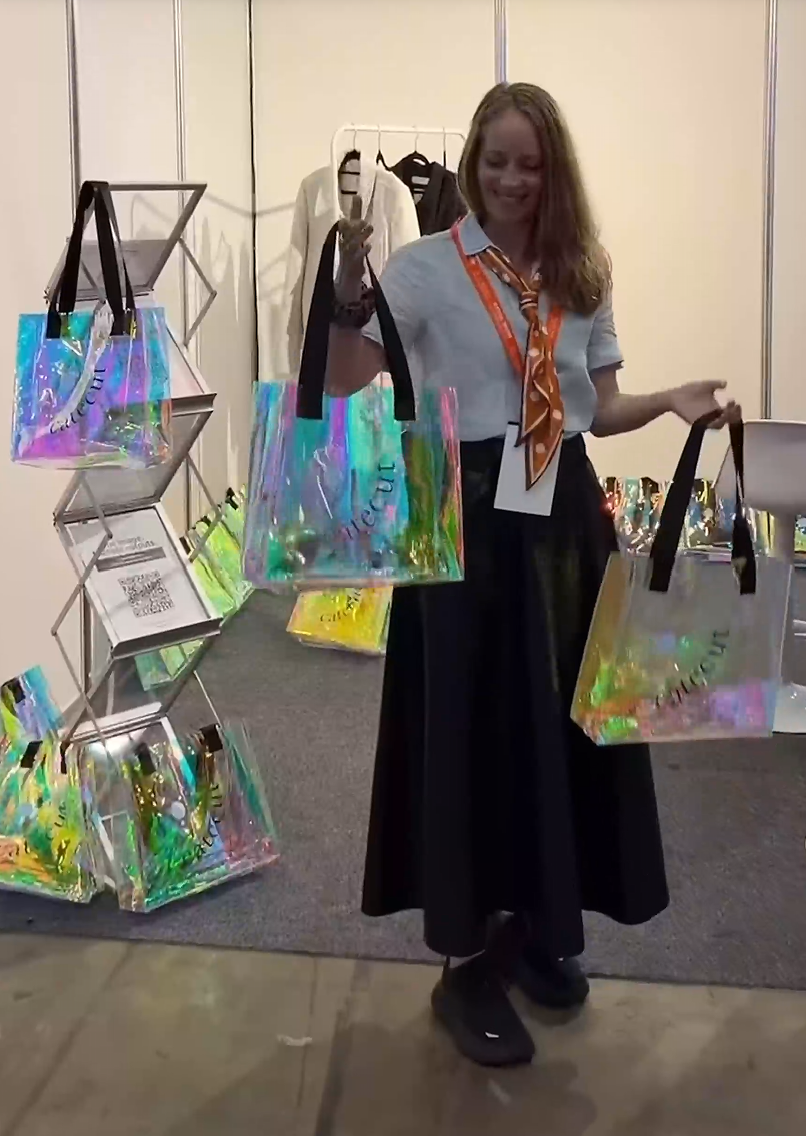
Heiðrún Sigfúsdóttir, Founder and CEO, Catecut · 30 September 2026
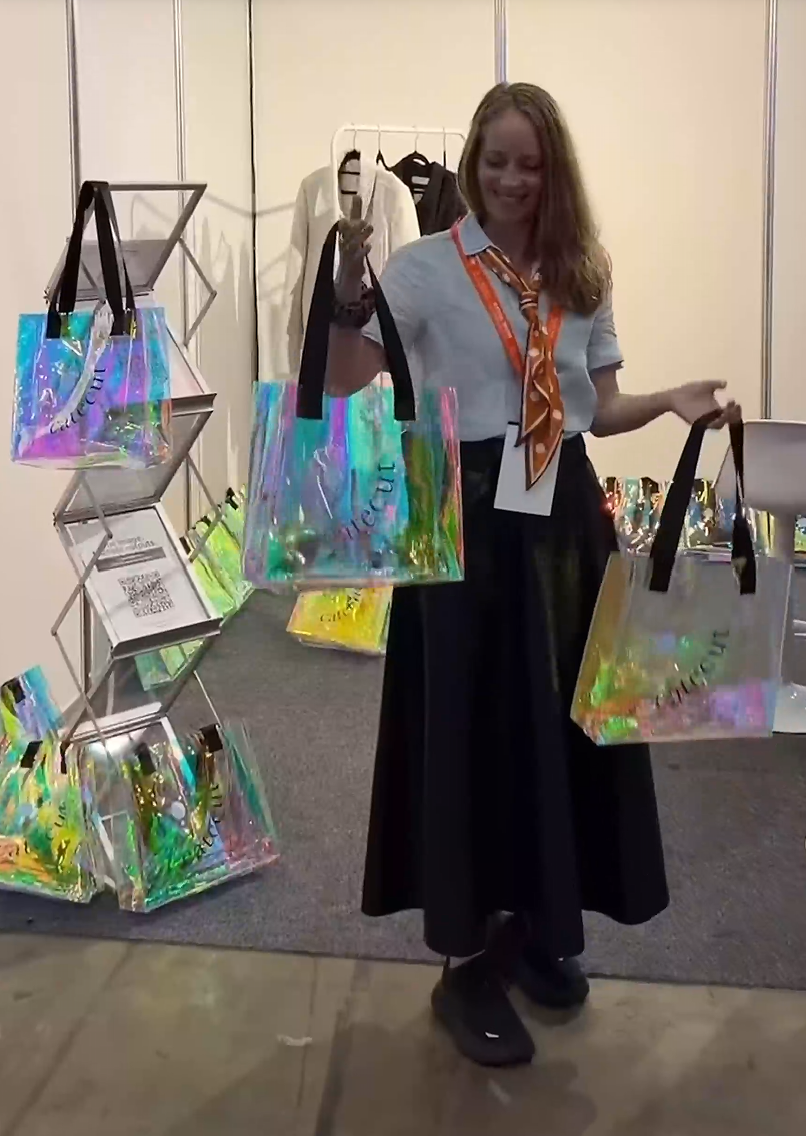
Featured image: Catecut at Retail Show Australia.
What we learned in Melbourne
The biggest thing slowing down fashion brands in Australia is not design, sourcing or marketing. It is the gap between "the stock has arrived" and "the products are live and findable online." That was the clearest message from three days of conversations at Retail Show Australia 2026 in Melbourne (22–24 September, booth 373).
We flew in from Iceland expecting to talk about technology. Instead, almost every conversation turned to the same outcome: brands want new collections online sooner, described properly, and easy for shoppers and search engines to find.
In short, here is what we heard:
- The slowest step in a launch is writing product data, not making the product.
- Brands sell on many platforms, so product data has to work everywhere.
- Small teams do not want another tool to learn. They want the result done for them.
- Suppliers, logistics partners and service providers all feel the same bottleneck.
- Timing matters: Australian brands are heading into summer, and every week a new range sits offline is lost selling time.
1. Why do new fashion products take so long to go live?
Because nobody plans for the product data step. A range gets designed, sourced, costed, shipped and photographed. Then someone has to write a title, description, colour, fabric, fit, neckline, sleeve length and filter tags for every single item.
For a collection of 60 styles in several colourways, that is hundreds of fields typed by hand. In small teams it usually lands on the founder or one ecommerce person, late at night, right before launch.
We heard versions of this from brand owners, from a sourcing agency that launches new labels, and from service providers who support retailers. One way to put it: the product is ready, but the product page is not.
The end result brands want: a new range live within days of the photo shoot, not weeks.
2. Does product data need to work across more than one sales channel?
Yes. Many of the sellers we met do not run on a single platform. We spoke with a seller running an Etsy store, and with a Malaysian retail group on Shopline that wanted to explore a pilot. Others sell through Shopify alongside marketplaces and wholesale.
The lesson for us was simple: good product data is not tied to one platform. Accurate attributes, clear descriptions and consistent tags are valuable wherever the product is sold, whether that is a webshop, a marketplace or a wholesale catalogue.
The end result brands want: describe a product once, well, and reuse that data on every channel.
3. Do small fashion brands want another tool, or the result?
The result. This was the most honest feedback we got all week. Small brand teams are already juggling production, stock, social media and customer service. A new tool, however useful, is one more thing to learn.
The question we heard most at the booth was not "what does it do?" It was "can you just run it on my products?" So we did, live, on brands' own product photos. Seeing their own blouse or knitwear turned into a finished product listing in about a minute changed the conversation from features to outcomes.
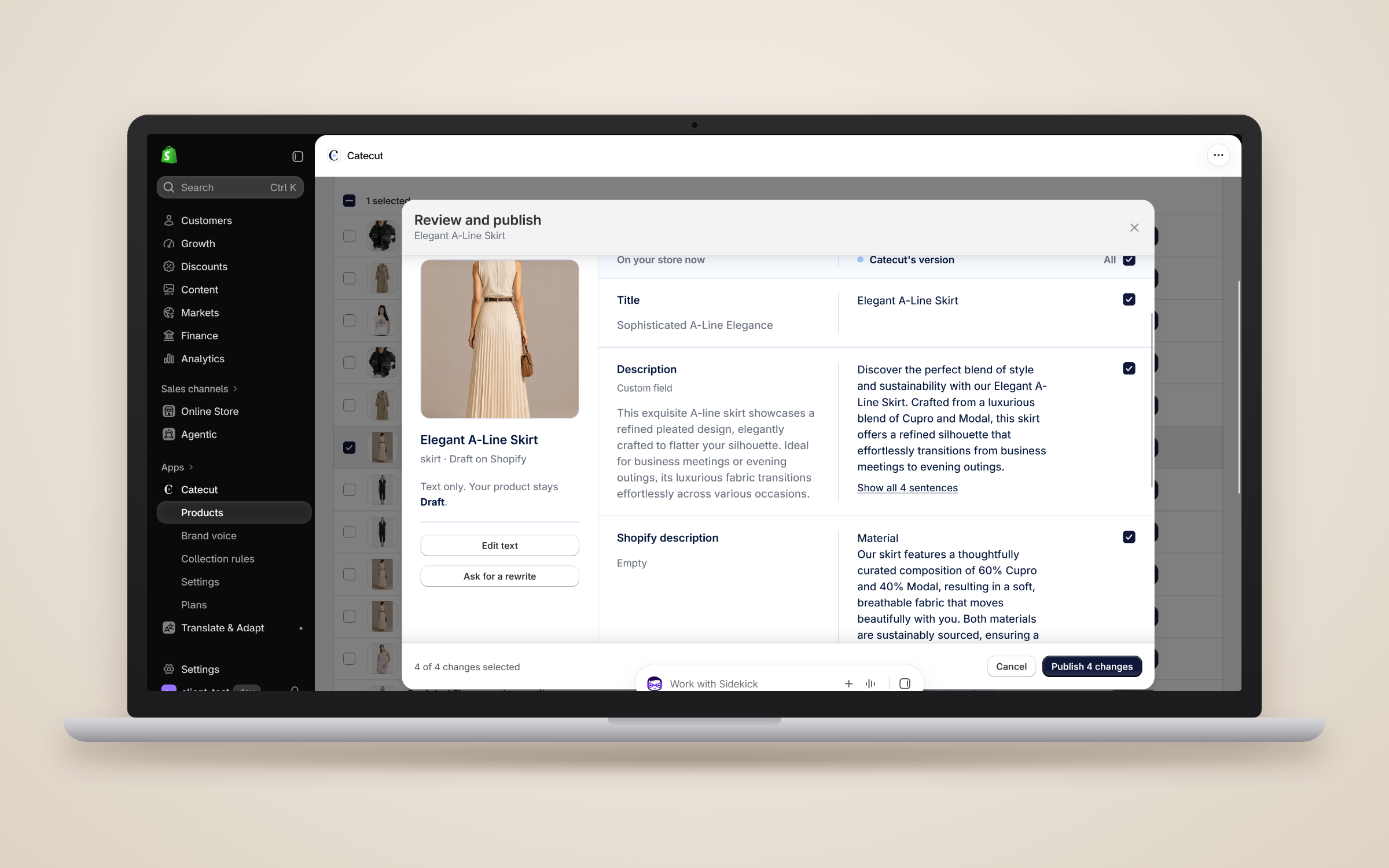 Editorial note — A finished fashion product listing ready to publish on Shopify.
We have since changed how we follow up. Instead of sending another demo link, we offer to set the brand up and run their first products ourselves, so they see the finished listings before they commit any time.
The end result brands want: finished, accurate product pages without adding work to a small team.
4. Who else in retail feels the product data bottleneck?
Everyone around the brand. Some of our best conversations were not with brands at all, but with the businesses that serve them:
- Sourcing agencies that take a label from idea to finished range, and then watch the launch stall at the listing stage.
- Logistics and fulfilment providers whose clients have stock in the warehouse that is not yet sellable online.
- Printing, merchandise and staffing companies that work with the same small retailers every week.
- Retail technology and payments providers looking for ways to add AI to what they already offer their clients.
Each of them sees the same pattern from a different angle. A product that is not listed properly does not sell, no matter how good the sourcing, shipping or checkout is. Several of these conversations are now turning into partnership calls.
The end result the ecosystem wants: clients who launch faster, sell more, and stay longer.
5. Why does timing matter so much for Australian fashion brands right now?
Because summer is close. Melbourne was in early spring during the show, about a month from summer, and brands were already thinking about warm-weather ranges. A summer bag or linen shirt that goes live in December instead of October loses its best selling weeks.
The show floor itself was quieter than many exhibitors hoped. That turned out to be useful. Fewer passers-by meant longer, more honest conversations with the people who did stop, and we learned more in those than we would have from hundreds of quick badge scans.
The end result brands want: seasonal ranges online at the start of the season, not halfway through it.
What should fashion brands do before their next launch?
Based on what we heard in Melbourne, here is a short checklist any fashion brand can use, whatever tools they work with:
- Plan the product data step. Put it on the launch timeline next to the photo shoot, with an owner and a deadline.
- Agree on your attributes. Decide which fields every product needs (colour, fabric, fit, neckline, sleeve, pattern, occasion) and use the same words every time.
- Write for search and for AI assistants. Clear titles and complete attributes help Google, marketplace search and AI shopping assistants understand what you sell.
- Build filters shoppers actually use. Consistent tags make collection filters work, which helps shoppers find the right size, colour and style faster.
- Keep one source of truth. Create product data once and reuse it on your webshop, marketplaces and wholesale.
- Measure time to live. Track how many days it takes from photo shoot to live product page, and aim to cut it every season.
Frequently asked questions
What is product data in fashion ecommerce?
Product data is the information that describes each item online: title, description, colour, fabric, fit, size, pattern, style details and tags. It powers product pages, collection filters, site search, Google Shopping and marketplace listings.
Why does product data matter for SEO and AI search?
Search engines and AI shopping assistants can only recommend what they understand. Complete, consistent attributes and clear descriptions make it easier for them to match a product to what a shopper is asking for.
How long should it take to list a new fashion product?
Many small brands spend several minutes to an hour per product writing listings by hand. With AI that reads product photos, a complete listing can be ready in about a minute, leaving the team to review rather than write.
What is the biggest bottleneck in launching a fashion collection online?
For most small and mid-sized brands we spoke with in Melbourne, it is creating accurate product listings after the photo shoot, a step that is rarely planned or resourced.
Does this only apply to Shopify stores?
No. The same challenge exists on Etsy, Shopline, marketplaces and wholesale platforms. Good product data is valuable on every channel.
Thank you, Melbourne
We came to Australia to learn, and we are leaving with a clearer picture of what fashion brands actually need: faster launches, product pages that sell, and less manual work for small teams. We are putting more focus on the Australian market as a result.
Thank you to everyone who stopped by booth 373, shared their launch stories and let us run their own products live. If we met in Melbourne, the show offer is still open until 24 October 2026: a 7-day free trial plus 25% off your first six months. Claim it here: https://catecut.com/retail-show-australia
Didn't make it to the show? You can try Catecut on Shopify, or get in touch and we will run your first products for you.
Heiðrún Sigfúsdóttir, Founder and CEO, Catecut